
UK Self-Exclusion Tools and Gambling Bank Blocks
 Available in GB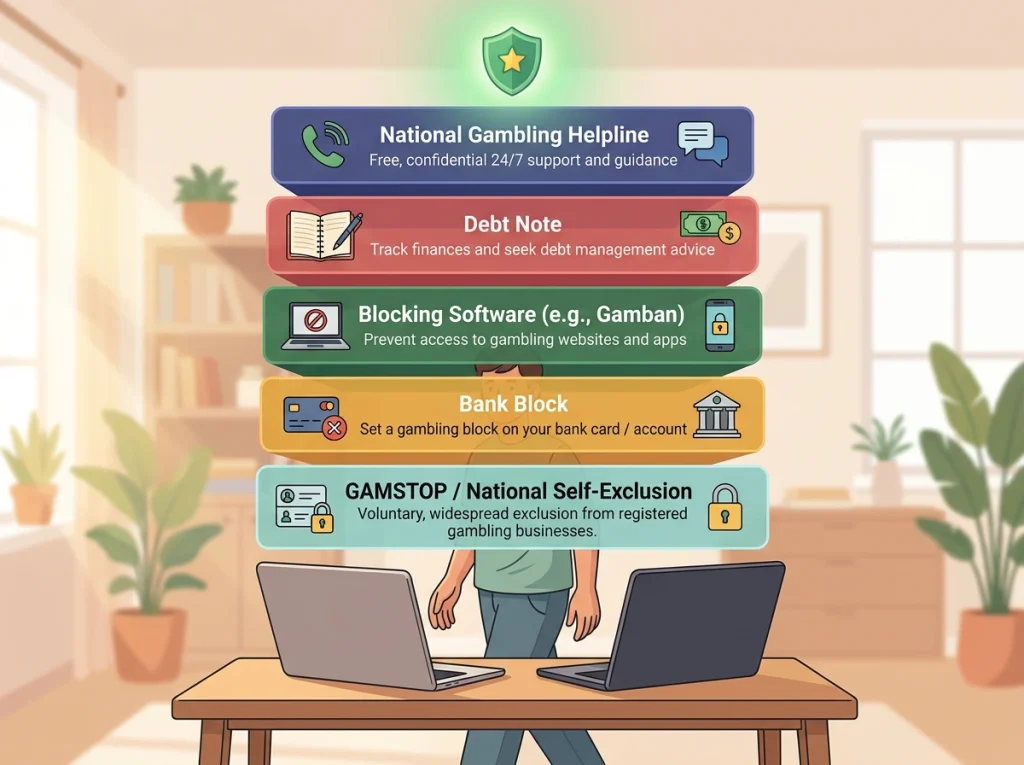
Some people look for gambling sites outside GAMSTOP because they want a quick account, fewer checks or a way to keep playing after restrictions are in place. That situation deserves a different answer from a normal website-checking guide. If you are already self-excluded, blocked by your bank, worried about debt or feeling unable to stop, the safer question is not “where else can I play?” It is “what protection and support can I put around myself right now?”
This page takes a support-first approach. It does not diagnose anyone, does not promise a treatment outcome and does not explain how to remove blocks or get around self-exclusion. It explains practical layers that recognised UK resources describe: GAMSTOP, bank gambling blocks, blocking software, venue self-exclusion, debt support, health support and crisis signposting.
If gambling is causing problems, the NHS lists support options and notes that the National Gambling Helpline run by GamCare is free and available 24/7. GamCare lists the helpline number as 0808 8020 133. If there is immediate danger, serious distress or risk of harm, use urgent local help rather than waiting for an account problem to resolve.
Protection works best as several practical layers, not as one perfect tool.
Evaluating Personal Gambling Triggers and Self-Exclusion Needs
When a gambling website is described as “not on GAMSTOP”, the phrase can sound like a product feature. For someone who has chosen self-exclusion or is trying to stop, it can be a warning sign. GAMSTOP says users agree not to try to access online gambling accounts as part of its Terms of Use. That does not need to be framed with blame. It simply means that looking for a route around the block is in conflict with the purpose of the protection.
Pause and name what is happening. Are you tempted to gamble after self-exclusion? Are you trying to bypass a bank block? Are you in a dispute and thinking of depositing elsewhere to win money back? Are you worried that a relative is searching for new gambling sites after restrictions? Each of those situations needs a support plan before any conversation about payments, licences or account checks.
Support-first thinking does not mean ignoring practical questions. You may still need to check whether a site is licensed, protect documents or deal with a complaint. The difference is priority. When harm, debt or loss of control is present, protecting yourself comes before assessing a new gambling opportunity.
Protective layers you can consider
Recognised UK resources describe several tools that can sit together. GambleAware lists practical tools such as GAMSTOP, blocking software, bank payment blocks and venue self-exclusion as layers of support. The Gambling Commission also lists bank gambling restrictions and card locks as ways to block gambling payments with banks. None of these tools should be described as a guarantee. They are barriers that reduce opportunities, create pauses and make it easier to avoid acting on an urge.
| Layer | What it is for | What to check | Important limit |
|---|---|---|---|
| GAMSTOP | Online self-exclusion from companies covered by the scheme. | Whether your current concern is about trying to gamble after self-exclusion. | It is not a reason to look for sites outside the scheme. |
| Bank gambling block | Blocking gambling transactions through a bank or card provider. | Whether your bank offers the feature and whether it applies to cards or accounts you use. | It may not cover every payment path and should not be treated as the only protection. |
| Blocking software | Reducing access to gambling websites or apps on devices. | Which devices you use and whether another person can help with setup. | Software can be changed or removed, so it works best with other layers. |
| Venue self-exclusion | Reducing access to gambling in physical venues. | Whether land-based gambling is part of the problem. | It does not solve online access by itself. |
| Debt support | Getting help when gambling has affected bills, borrowing or repayments. | What debts exist, which payments are urgent and whether lender complaints are involved. | Debt guidance is not the same as a gambling complaint outcome. |
| Health and helpline support | Speaking to trained support when gambling is causing harm. | Whether you need immediate conversation, ongoing support or urgent help. | It should not be delayed until a withdrawal or account dispute ends. |
Scenario: you are tempted after self-exclusion
The most useful first action is to remove the immediate route to play. Close the browser tab, step away from the device and use a support contact before reading more gambling websites. If you have been searching for sites not covered by GAMSTOP, treat that as a sign that the protection is being tested, not as a sign that a better operator has been found.
Do not look for a different payment method, a new account route, a VPN or another person’s details. Those actions can create more risk around money, data and personal relationships. They can also make a later dispute more complicated. A safer step is to strengthen the barriers around the urge: bank blocks, blocking software, support from someone you trust and helpline contact.
If the trigger is a money problem, do not try to solve it by gambling. If the trigger is stress or boredom, make the next step something small and immediate: leave the gambling page, tell someone, move money away from easy access if that is safe for you, and contact support.
Scenario: debt is already involved
Debt changes the decision. Gambling while under pressure from debt can make choices feel urgent and narrow. MoneyHelper says many banks and building societies offer an option to block gambling transactions through debit-card bank accounts, and it gives debt-support context. Citizens Advice also signposts help with gambling problems, debt and lender complaints.
Write down the practical money picture before making any gambling decision: essential bills, rent or mortgage, priority debts, borrowing, payment dates and whether anyone else is affected. If a gambling account dispute is part of the problem, keep the complaint evidence separate from the debt list. The complaint may take time; the debt situation may need support sooner.
Do not borrow, sell essentials or make another deposit because a withdrawal is delayed. If you have already used credit, loans or family money to gamble, support is more urgent than checking another website. A bank block can help create space, but it should sit alongside debt guidance rather than replacing it.
Scenario: a bank block is already active
GamCare explains that bank gambling blocks are free tools offered by most UK banks, often applied at card level and sometimes protected by cooling-off periods. The details can differ by bank, so this page does not rank banks or promise that every block works the same way. The important point is that an active block is a protection signal. It should not be treated as an obstacle to beat.
If you find yourself looking for wallets, transfers or other routes because a card block stopped a gambling payment, pause and take that seriously. The block did what it was meant to do: it created a barrier at a risky moment. Strengthen the barrier by adding device blocking, speaking to a support service, moving away from the payment page and asking someone you trust to help you keep distance from gambling access.
If you are worried that a gambling site has still taken money despite a block, keep payment records and read the page on payments and ID checks. If the issue becomes a complaint with the operator, use the complaints and disputes route.
Scenario: you are in emotional distress
When distress is high, do not wait for a gambling account to answer before seeking help. The NHS lists support and treatment groups if gambling is causing problems and lists the National Gambling Helpline as free and available 24/7. GamCare lists the National Gambling Helpline number as 0808 8020 133. Citizens Advice also signposts Samaritans for mental-health crisis support.
If you feel unsafe, at immediate risk or unable to get through the next few hours, use urgent local support. This page cannot assess your health or tell you what treatment you need. It can say that immediate safety comes before a withdrawal, bonus, account closure or licence question.
If the distress is linked to shame, remember that support services exist for this situation. You do not need to solve the whole account problem before speaking to someone. A short first call can be about the next hour, not the whole future.
Scenario: you are supporting someone else
If you are worried about a partner, friend or family member, keep the conversation practical and calm. Accusations can make someone hide activity. A useful first question is: “What protection would make it harder to gamble today?” That might mean bank blocks, device blocking, access to support, help with debt letters or agreeing not to search for new websites.
Do not take control of another person’s documents or accounts without consent or lawful authority. Do not create accounts in your own name for someone else. Do not send money to cover gambling losses without understanding the debt and support situation. You can help by encouraging support, keeping evidence for a complaint if they ask you to help, and reducing access to immediate gambling opportunities.
If there are children, shared finances or safety concerns, debt and consumer-support routes may be relevant as well as gambling support. Keep private information private, but do not carry the whole situation alone.
A simple protection plan
- Stop the immediate action. Close the gambling page, cancel the deposit attempt or step away from the device.
- Use one direct support route. Contact the National Gambling Helpline on 0808 8020 133, speak to someone trusted or use urgent local help if safety is at risk.
- Add a payment barrier. Check whether your bank offers gambling restrictions or card locks and use them where appropriate.
- Add an access barrier. Consider blocking software or device controls, especially if searching for new sites is the pattern.
- Separate money problems. Write down debts and bills and use debt-support guidance rather than trying to gamble out of pressure.
- Handle account disputes separately. If money is already stuck with an operator, keep evidence and use the complaint route without making more deposits.
- Review the pattern. If a tool was bypassed or nearly bypassed, add another layer instead of blaming yourself and doing nothing.
What this page will not help you do
- It will not explain how to remove, weaken or bypass GAMSTOP.
- It will not suggest payment routes around bank gambling blocks.
- It will not recommend gambling websites outside UK protections.
- It will not rank banks, blocking tools or support providers as if one option guarantees safety.
- It will not give medical, legal or debt advice for a personal case.
Those limits are deliberate. When restrictions are already part of the picture, weaker protection is not a benefit. A safer page gives you barriers, evidence routes and support options, not a new path back to the same risk.
Protection and support routes to use next
If you are checking a website because you are unsure whether it is licensed, use the official register guide. If you are seeing unclear ID checks, missing tools or withdrawal problems, read the warning signs page. If payment, document or balance terms are the main issue, read the payment and verification checklist. If an account problem has already become a formal dispute, use the complaints and disputes guide.
If you decide to resume playing responsibly after your restriction ends, always remember how to check a gambling website in the official register first.
We prioritize player safety and provide objective information about UK slots not on Gamstop to help you make informed decisions.
Questions about blocking and support
Is a site outside GAMSTOP a safer choice if I am self-excluded?Do bank gambling blocks guarantee that no gambling payment can happen?What number can I use for gambling support?