
Fast Casino Withdrawals and Secure ID Verification Checks
 Available in GB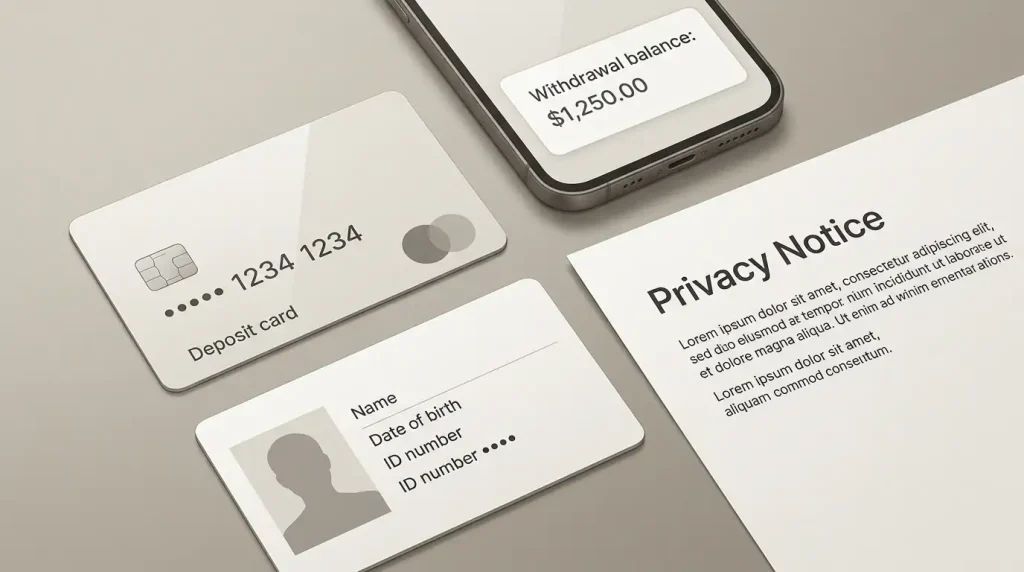
Before putting money into a gambling account, the practical question is not only whether the site looks attractive. It is whether you understand who holds the account, what checks can happen, how your money is described, what terms affect withdrawals and what personal information you may need to provide. These checks are especially important when a website is unfamiliar, appears outside GAMSTOP coverage or makes gambling sound unusually easy.
This page gives a pre-deposit checklist. It does not name payment methods offered by any operator, promise withdrawal times, compare bonuses or recommend a gambling website. The focus is on facts a UK reader can use to read terms more carefully and avoid putting money or documents into an account that is unclear.
A deposit decision should include money, identity, documents, withdrawal terms and privacy information, not only the advertised offer.
Securing Payment Sources for Faster Casino Withdrawals
In listed Great Britain sectors, including online betting, casino and bingo, operators must not accept credit-card payments for gambling. E-wallet payments should also not be funded from credit cards for gambling. That means credit-card availability is not a normal positive feature for the GB market. If a website appears to accept credit-card-funded gambling, or is vague about how wallet funding is handled, treat that as a serious reason to check the operator and terms before proceeding.
Payment checks should also include the name that appears on the payment page or receipt. If the business name on a receipt does not match the website name or the name shown in the official register, do not ignore the difference. It may be explainable, but it should be understood before you add more money. A clear operator should make it possible for a customer to know who is receiving the funds.
Understand ID checks before the account is used
Online gambling businesses must ask for age and identity proof before gambling. Remote licensees must verify identity before gambling and should tell customers before deposit what identity documents or information may be required and when. A website that advertises “no checks” or makes verification sound optional should not be treated as more convenient. It may mean the most important checks will appear later, possibly when you ask to withdraw.
Identity checks can also involve more than confirming a name and date of birth. Casino anti-money-laundering and customer identification work can involve personal and financial history information. That may include document requests connected with source of funds or source of wealth. A customer should therefore read the identity and document wording before depositing, not after an account balance is locked pending checks.
If a website asks for sensitive documents, make sure the business identity is clear first. Sending a passport, driving licence, bank statement or other financial record to an operator you cannot identify creates a data risk as well as a gambling risk.
Pre-deposit checklist
| Area to check | Question to ask before deposit | Why it matters | If the answer is unclear |
|---|---|---|---|
| Payment method | Does the site explain accepted payment sources without suggesting credit-card-funded gambling? | Credit-card gambling is restricted in listed GB sectors, including online betting, casino and bingo. | Pause and check the official register, payment terms and business identity. |
| Payment recipient | Does the payment page or receipt match the business identity you can verify? | A mismatch can make it harder to know who holds the money and who to contact. | Save the receipt and do not make another deposit while the identity is unclear. |
| Age and identity | Does the site explain that age and identity proof are required before gambling? | Online gambling businesses must ask for age and identity proof before gambling. | Do not treat missing checks as a benefit; read the warning signs page. |
| Document timing | Does the site say before deposit what documents may be required and when? | Remote licensees should tell customers what identity documents or information may be required and when. | Do not assume documents will never be requested just because sign-up feels easy. |
| Source-of-funds possibility | Could financial-history information be requested later? | Casino customer identification and anti-money-laundering checks can involve personal and financial history information. | Decide whether you are comfortable before sending money or documents. |
| Customer funds | Does the operator disclose customer-funds protection arrangements, level and method at deposit? | Operators holding customer funds must disclose this and require acknowledgement. | Avoid assuming your balance has a protection level that is not stated. |
| Deposit and bonus balances | Can you distinguish deposited money, winnings and bonus money you have become entitled to under terms? | Customer funds can include deposited money, winnings owed or left in the account, and bonus money the customer has become entitled to. | Read the terms before accepting a bonus or mixing balances. |
| Withdrawal restrictions | Can deposit balance be withdrawn, and are any restrictions clearly explained? | Players must be told that deposit balance can be withdrawn at any time, including when a bonus is pending or active, except where general regulatory obligations apply. | Do not rely on verbal or chat assurances; save the written terms. |
| Fees | Are any cost-reflective processing fees clear before deposit? | Operators must not have terms that restrict withdrawal of deposit-balance funds, and any cost-reflective processing fee must be clear before deposit. | Do not deposit if the cost wording is hidden, vague or changes during withdrawal. |
| Privacy notice | Does the site explain collection, use, purposes, retention and sharing of personal data? | People have the right to be informed about collection and use of personal data, including purposes, retention periods and sharing. | Do not upload sensitive documents until you understand who receives them and why. |
Customer funds: read the wording carefully
Customer-funds wording is often overlooked because it sounds technical. It should not be skipped. Operators holding customer funds must disclose the protection arrangements, level and method at deposit and require acknowledgement. This does not mean every balance has the same level of protection. The wording is the part that tells you what arrangement applies.
Customer funds can include money deposited in an online account, winnings owed or left in the account and bonus money the customer has become entitled to under the terms. The phrase is not limited to the original deposit. When a website separates deposit balance, bonus balance and winnings, read how each balance is treated and whether any term affects access to it.
Be careful with claims that sound stronger than the written disclosure. “Secure”, “protected” or “safe” language should not replace the actual customer-funds statement. A clear site should make the arrangement understandable before deposit, not only after a problem.
Withdrawals and bonus terms
Withdrawal terms are not only relevant after a win. They should be read before deposit because they can affect whether you feel trapped in an account. Players must be told that they can withdraw deposit balance at any time, including when a bonus is pending or active, except where general regulatory obligations apply. Operators must not have terms that restrict withdrawal of deposit-balance funds, and any cost-reflective processing fee must be clear before deposit.
That does not mean every withdrawal will be immediate or that no checks can ever happen. Identity, anti-money-laundering, fraud and other regulatory obligations can still matter. The practical point is that the written terms should not use a bonus or vague processing rule to prevent access to deposit-balance funds. If the site suggests you must keep wagering deposited money because a bonus is active, read the terms and keep a copy of the wording.
Avoid chasing a withdrawal problem with more deposits. A site that becomes unclear when money is requested deserves more caution, not more funds. If a dispute has already started, move from pre-deposit checking to an evidence and complaint approach.
Data and document safety
Payment, identity and privacy checks are connected. A gambling operator may need to meet regulatory and social-responsibility duties while also being transparent and safeguarding personal data. A customer should be told about collection and use of personal data, including purposes, retention periods and sharing. The privacy notice should be understandable before you upload documents, not hidden behind general statements.
Read who receives documents, why they are requested, how long they may be kept and whether they may be shared. If the website cannot be matched to a clear business identity, or if the privacy notice is generic and does not connect to the operator, treat that as a reason to stop. You should not have to guess where passport or banking information goes.
When not to deposit
- Do not deposit when the exact domain cannot be connected to a clear business identity.
- Do not deposit because a website promises no ID checks or anonymous gambling.
- Do not deposit if you are self-excluded, blocked by your bank, chasing losses or borrowing money to gamble.
- Do not deposit more money to “unlock” a withdrawal problem unless the written terms and business identity are clear and you have considered the complaint route.
- Do not upload sensitive documents to a site whose operator, privacy notice or contact route you cannot verify.
If you are trying to deposit after self-exclusion or while chasing losses, the safer step is to pause and seek support. This guide does not provide ways around payment blocks, identity checks, GAMSTOP or other protection tools.
Checks before deposits, documents and withdrawals
Before a deposit, use the official register check and the warning signs page. If an account has already been closed, a withdrawal has stalled or documents are being requested after a dispute, read what to do when a withdrawal, ID check or account closure becomes a dispute. If gambling blocks, self-exclusion or harm are part of the situation, go to support and protection options.
In case an operator refuses to process your winnings, our instructions on handling gambling complaints and withdrawal disputes will help you take the right steps.
Discover trusted gaming environments by browsing the top selections and expert reviews at Gamstop Free Slots UK.
Payment and ID checks people often misunderstand
Is a “no KYC” claim a good reason to join?Can a gambling site ask for financial history?Does customer-funds wording mean my money is fully protected?