European Roulette Casinos in the UK: What to Check
 Available in GB
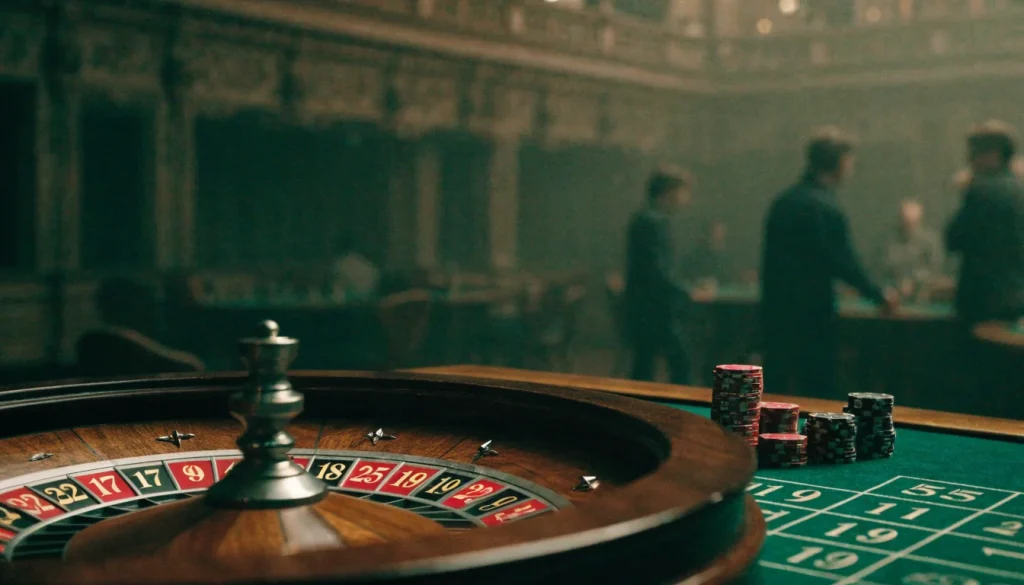
European roulette has 37 pockets and one zero, but choosing a UK casino also means checking its licence and game details.
What to Check Before You Choose a UK Roulette Casino
I used to start with the table list. If a site showed European roulette, a VIP room and a few polished banners, I treated that as evidence enough. It wasn’t. The safer order is to check the operator first, then the game menu.
For British players, the key name is the UK Gambling Commission (UKGC). It is the regulator for online casino activity in Great Britain. A casino taking real-money customers in England, Scotland or Wales needs the relevant UKGC operating licence, even when the company itself is based elsewhere. A foreign address is not a substitute for permission to serve the British market.
Check the licence, not just the badge
A UKGC logo in a footer proves very little on its own. Before depositing, find the operator’s legal name and licence number, then search for that number on the UKGC public register. Check that the record belongs to the same business running the casino and that the licence is current.
That small bit of admin has saved me from trusting sites that looked British but gave no clear explanation of who operated them. Platforms without a valid UKGC licence cannot legally offer real-money live roulette to British residents. Offshore sites may still be accessible, but they sit outside the UKGC system, so the protections attached to a UKGC-licensed casino do not follow you there.
Online casino games for real cash in the UK: key checks
The casino should also identify its terms, complaints route and responsible-gambling information without making you hunt through several layers of menus. “Trusted” is an advertising word. A register entry is something you can actually check.
Look for account controls before you fund it
Age verification must happen before a customer can deposit into a gambling account. That is a basic gate, not an optional feature to discover after playing. A UKGC-licensed casino should also prompt a new customer to set a financial limit before the first deposit and provide account-level controls that remain easy to reach.
For roulette, I want to see more than a general responsible-gambling paragraph. UK-licensed live casino operators must provide deposit limits, loss limits, session-time reminders, reality checks and cool-off periods. They must also support GamStop self-exclusion. UKGC-licensed casinos are required to offer self-exclusion tools more broadly as well.
I once ignored a reminder because I was concentrating on the next round. That was my mistake, but the control still needs to be visible and usable when you decide to pause. If the only route is an email to support, I treat that as a warning sign.
Credit cards should not appear among the casino’s gambling payment options. UK-licensed casinos cannot accept credit cards for gambling, including credit-card funding routed through a money service business. A wallet cannot be used either when it allows credit-card funds to pay for gambling. Payment branding can look reassuring while hiding the funding route, so read the cashier terms rather than assuming every familiar wallet is permitted.
Casino Games: Slots, Live Tables and More
Find the game information
Before opening any of the online casinos with European roulette, locate the game’s information panel, rules or help file. RTP information should be available in a readable form, alongside the relevant game details. I do not need a sales claim about “premium odds”; I need to know where the operator publishes the return information and whether it is attached to the exact roulette product I am considering.
This matters particularly when a casino has several versions, including VIP-labelled tables or games supplied by different providers. Do not assume that a shared name means identical conditions. Check the individual information screen.
The same scrutiny applies to bonus funds. Read how roulette wagers are treated under the promotion before accepting anything. UK operators commonly apply game weighting to roulette, with wagers counting at 10% to 20% of wagering requirements; the exact treatment belongs in the casino’s own bonus terms. Some operators exclude live roulette from no-deposit bonus wagering, while others apply a 0–10% contribution rate when it is included. Since January 2026, a specialist review reports that UK rules cap bonus wagering at a maximum of 10x for licensed operators, but I would still confirm the terms shown at registration.
Know what help exists if something goes wrong
A UKGC licensee must provide an internal complaints process and access to an approved Alternative Dispute Resolution service. Those details should be easy to find, with a clear explanation of how to raise a dispute. Operators are also required to contribute to the Research, Education and Treatment levy, supporting work connected with gambling harm.
DO
- Verify the UKGC record on the public register
- Check the operator’s legal name and licence number
- Confirm age and financial controls are active
- Inspect self-exclusion and time-out tools
- Find the RTP information before depositing
DON’T
- Rely on a logo in the footer alone
- Trust a site that lacks a clear explanation of its operator
- Use credit cards for gambling
- Use wallets that allow credit-card funding
None of this makes a casino risk-free. It does give you a concrete checklist: verify the UKGC record, confirm age and financial controls, inspect self-exclusion and time-out tools, check the payment restrictions, and find the RTP information before depositing. If those basics are buried or vague, I move on. No VIP treatment needed.
Top online casinos in the UK
- NightWinBonus: £900 + 400 free spins · Payout speed: 1-3 business days
- JetsetspinsBonus: 200% Bonus + 100 Free Spins + Free Royal Wheel · Payout speed: 1-3 business days
- NightLuckBonus: Welcome Pack + 805% Up To 6400€ + 280 FS · Payout speed: 1-3 business days
- DieselwinBonus: Welcome Pack 250% up to £4000 + 200 FS · Payout speed: 1-3 business days
- ZombillionBonus: Welcome Pack 250% up to £4000 + 200 FS · Payout speed: 1-3 business days
- BeOnBetBonus: 100% up to €500 + 100 FS · Payout speed: 1-3 business days
- SlotoSportBonus: 500% up to £ 10 200+ 777 FS · Payout speed: 1-3 business days
European Roulette: One Zero, 37 Pockets
European roulette is built around a wheel with 37 pockets: the numbers 1 through 36, plus one green zero. That single zero is the feature that gives the game its identity and separates it from the American version, which has an additional green pocket marked 00.
I used to think the wheel was mostly decoration around the numbers. It is not. The number of pockets is the starting point for every probability on the table. The ball has 37 possible resting places, and the casino’s mathematical advantage comes from the fact that the zero does not fit the usual red/black, odd/even or high/low split. It is an extra result outside those paired groups.
What the 37 pockets mean
The numbered pockets run from 1 to 36. They alternate between red and black around the wheel, while zero is green. The arrangement is not simply a straight count from one side to the other; the wheel and the betting layout use different sequences. That can look confusing when you first switch between them, but the important rule is straightforward: every spin ends with the ball in one pocket.
There is no second zero on a European wheel. That is the practical definition to check when a casino labels a game “European roulette”. A table showing 0 and 00 is not the single-zero version, even if the game’s colours, controls and general presentation look familiar.
The wheel does not remember previous results. If the ball has landed on red several times, the next spin is not “due” to be black. A run of zeros does not make zero less likely on the following spin either. I have made that mistake myself, usually after watching a screen for too long and deciding a pattern had appeared. It had not.
Live Casino Lightning Roulette in the UK: Licence and Play
The house edge
European roulette has a house edge of 2.70%. In plain terms, this is the casino’s built-in mathematical advantage over a large number of spins under the standard rules. It is not a fee taken visibly from each wager, and it does not predict what will happen in a short session. You can win early, lose early or see results that look unusual for a while.
The percentage describes the long-run relationship between the wheel’s probabilities and the standard returns attached to the game. The zero is what creates the gap. Without it, a simple two-way division of the 36 numbered pockets would be perfectly balanced. With one additional pocket, the casino gains an edge.
That distinction matters because a winning result does not prove that the game is favourable, just as a losing result does not mean the wheel has corrected itself. Roulette outcomes remain chance events. The house edge is a property of the rules, not a prediction about your next spin.
Why the zero changes the maths
Many familiar roulette groupings divide the numbered results into two broad sides: red and black, odd and even, or low and high. Zero sits outside those pairs. When it appears, those groupings do not win under their standard rules.
That one pocket may look insignificant beside the rest of the wheel, but it is the reason the single-zero game is not an even contest. Every spin includes the possibility of zero, and that possibility affects the mathematical return of the game. The same principle explains why adding another green pocket changes the advantage again: more pockets mean a different balance between the possible results and the stated returns.
The wheel’s design therefore matters more than the name on the game tile. “European” should mean one zero and 37 pockets, not merely a European flag in the interface or a title that sounds continental. I check the actual wheel display before treating the label as meaningful. Small detail, big difference.
Online Casino Tournaments UK: Formats, Rules and Prizes
A spin from start to finish
A round begins with the ball moving around the wheel while the wheel turns in the opposite direction. Once the ball loses speed, it drops towards the pockets and settles in one of them. The result is the pocket itself: a numbered result from 1 to 36 or the green zero.
The spin does not become more predictable because you watched the ball’s path. Nor does the previous result give useful information about the next one. Physical movement, animation and sound can make the round feel like a process you might read, but the final outcome is still determined by chance.
For an online European roulette casino, the same core idea applies even when the presentation is digital: the game represents a wheel with 37 possible pockets and the single-zero rules. Once that foundation is clear, terms such as “European roulette online” stop being vague labels. They refer to a specific wheel structure, not a special method for forecasting results.
The useful checkpoint is simple: look for numbers 1 to 36 and one zero. Then remember the mathematical cost built into that wheel: a 2.70% house edge. Everything else is presentation.
How to Compare Roulette Tables Without Chasing “Best”
The phrase “best European roulette casino” sounds useful until you open three tabs and find three completely different games wearing the same label. I have made that mistake myself: choosing the table with the loudest banner, then discovering that its bonus terms were less useful than the game beside it.
A better comparison starts with the table, not the advertising around it. For an online European roulette casino in the UK, I check the following points before deciding where to play:
- Is it genuinely European roulette, with the expected single-zero format?
- Is the table RNG-based or presented as a live game?
- What are the minimum and maximum stakes shown in the game information?
- Are the rules, payouts and any special features displayed before you place a bet?
- Does roulette qualify for bonus funds, and how is that activity weighted?
That last point is easy to skip. It should not be.
Compare the rules before the appearance
Two tables can look almost identical while applying different conditions. Open the rules panel rather than relying on the thumbnail. Check the wheel type, the available betting areas, the payout schedule and whether a named feature changes the ordinary game.
This is where the term “European roulette” matters. It should identify the single-zero variant, not simply act as decoration in a game title. If the table adds multipliers, altered payouts or another feature, treat it as a separate product and read its own rules. A familiar-looking layout does not make every version interchangeable.
I also ignore claims such as “premium”, “elite” or “best”. Those are sales labels, not measurable qualities. The useful information is usually tucked into the help icon or paytable.
Match the format to your playing style
The same roulette rules can be delivered in different ways. An RNG table is software-generated, while a live table uses a streamed studio presentation. They are not automatically better or worse; they suit different preferences.
I tend to compare the practical details:
- Pace: does the interface leave enough time to review the layout and confirm a wager?
- Information: can you see the rules, recent game information and bet status clearly?
- Stakes: does the table accept the amount you intended to risk?
- Distractions: are side features competing for attention with the basic game?
- Availability: can you access that particular table when you want to play?
A faster interface can feel efficient, but it can also make casual decisions feel automatic. That is not a reason to reject it; it is a reason to notice what the format encourages. I have lost track of time more easily on a busy table than on a plain one. Not a great feature.
Check how roulette affects bonus funds
A casino bonus can make roulette look attractive while contributing very little towards its wagering requirement. Most UK operators count roulette wagers at between 10% and 20% of those requirements, so the amount credited may be far lower than the amount staked.
The exact treatment varies by operator and by format. A specialist review reports that live roulette may receive 10% or 20% game weighting, whereas RNG roulette can receive 100%. Treat that as something to verify against the current promotion and its full terms, not as a permanent rule across every casino.
Look for these details:
- whether roulette is eligible at all;
- whether live and RNG tables have different game weighting;
- whether a particular table or feature is excluded;
- whether bonus funds can be used on the game;
- whether winnings remain subject to other conditions.
A “100% contribution” can sound like a recommendation, but it does not remove the wagering requirement or turn a promotion into cash. It only describes how wagers are counted. Read the wording attached to the specific offer.
Do not confuse demos and slots with tables
A free European roulette demo can be useful for learning the interface without staking money. It can show where the controls sit and whether the table feels readable. It does not tell you how a bonus will treat real-money play.
The same applies to an “European roulette slot” or a roulette-themed slot. It may borrow the name, graphics or atmosphere, but it is still a slot product rather than a roulette table. Compare like with like: a demo with a real-money roulette version, and an RNG table with another RNG table.
My shortlisting method is simple: remove the marketing words, open the rules, inspect the format and then read the bonus terms. If two tables still look equal, I choose the one whose conditions are easiest to understand. Clear beats flashy.
Playing for Real Money: Bets and Payouts
The first time I played European roulette for real money, I paid too much attention to the winning number and not enough to the type of bet I had placed. Roulette payouts are not all alike. A wager on one number has a very different return from a bet covering a colour or a range of numbers, even when the stake is identical.
The figures below use the standard “to one” format. So, a 35:1 win means the stated profit is 35 times the stake, with the original stake returned separately. Check the table’s paytable before you confirm a wager, especially if you are playing a branded or VIP version rather than a straightforward European roulette game.
Inside bets
Inside bets are placed on individual numbers or small groups of adjacent numbers. They offer the larger potential returns, but they cover fewer outcomes.
- Straight-up bet: this is a wager on one number. If that number wins, the payout is 35:1. This applies to both European and American roulette.
- Split bet: two neighbouring numbers are covered together. A winning split pays 17:1.
- Street bet: this covers a horizontal row of three numbers on the layout. The payout is 11:1.
I used to see the 35:1 figure and treat it as the main attraction. That was backwards. The larger return comes with a narrower winning target. A straight-up bet can land, of course, but nothing about the payout makes the result more likely.
A split gives you two numbers instead of one, while a street covers three. The return falls as the covered group grows. That is the basic trade-off: narrower coverage and a bigger stated payout, or wider coverage and a smaller one.
Outside bets
Outside bets cover broader categories rather than a single number or a small cluster. The common examples are:
- Red or black
- Even or odd
- High or low
Each of these pays 1:1 when it wins. A winning stake therefore produces an equal amount in profit, alongside the returned stake under the usual payout notation.
These bets can feel calmer because the selection is broader, but they are still roulette bets. Choosing red repeatedly does not make the next result more likely to be red, and changing from red to black after a losing spin does not create an advantage. I have made both mistakes while trying to turn a losing session around. Neither helped.
Choosing a bet for real money
When you play European roulette online in the UK, start by reading the bet label and payout shown on the game screen. Do not assume that a familiar-looking layout means every version uses the same presentation. The important part is knowing exactly what your stake covers and what the displayed ratio means before you press the button.
For anyone learning how to play European roulette, a free-play mode can be useful for recognising straight-up, split, street and outside bets without putting real money at risk. It does not make the results predictable, though. Moving later to European roulette for real money changes the financial consequence, not the underlying chance.
I would also avoid treating the biggest payout as the “best” bet. If you want a single number, the straight-up return is 35:1. If you prefer broader coverage, the 1:1 outside bets are easier to understand. That is a choice about the shape of the wager, not a method for defeating the wheel.
Keep it simple.
Single-Zero Roulette and the Bets on Its Layout
A European roulette table is built around a single-zero wheel. Its pockets run from 1 to 36, with one green zero alongside them. That extra pocket matters because it is neither red nor black, neither odd nor even, and neither high nor low. When the ball stops there, many familiar outside bets do not win.
I used to look at the green zero as just another space on the felt. It is not. It is the pocket that gives the casino its mathematical advantage on ordinary bets, so checking the table rules before placing anything is worth the few seconds it takes.
The single zero is the pocket that gives the casino its mathematical advantage on ordinary bets.
Where the bets sit
The layout separates wagers into two broad areas.
Inside bets are placed on, or around, the numbered spaces in the central part of the table. You can select one number, join neighbouring numbers, or cover a small group formed by the way the numbers are arranged. A straight-up wager, for instance, marks one number directly. A split sits across the boundary between two adjacent numbers, while a street covers a horizontal row of three.
That positioning is more than decoration. The chip’s location tells the dealer or software which combination you intended. On an online table, the selected area is normally highlighted, but I still check the confirmation before spinning. A misplaced chip is a very boring mistake to discover after the result.
Outside bets are found around the numbered grid. These cover broader groups rather than individual pockets: red or black, odd or even, high or low, columns and dozens. They look less dramatic because they cover more outcomes, but the single zero remains outside those red-and-black or parity groups. It is the catch built into the layout.
What happens when zero appears
On a standard European table, a losing outside bet is normally lost when zero comes up. That applies to even-money choices such as red or black, odd or even, and high or low. The single-zero wheel has 37 pockets, but those bets do not cover all 37 outcomes.
Some tables apply La Partage to eligible even-money bets. When the ball lands on zero, half of the wager is returned instead of the entire stake disappearing. The rule does not turn zero into a winning result, and it does not improve every wager on the table. It applies specifically to the qualifying even-money selections.
French Roulette Online Casinos in the UK: Rules & Odds
La Partage reduces the house edge on those bets from the standard European roulette level to 1.35%. That is a meaningful difference, but it is not a winning system. The wheel still decides the result, and a run of zeroes or ordinary losses can still hurt a bankroll.
What to check on the screen
Before betting, I look for the green zero, confirm that the table is marked European or single-zero, and open the rules panel to see whether La Partage is active. I also check that the chip is sitting in the intended inside or outside betting area.
Small checks. Less expensive mistakes.
Roulette Wheels Online: RNG, Speed and Minimum Stakes
When I look for an online casino with European roulette, I first check how the wheel is delivered. The screen may show the familiar European roulette wheel with its green zero and 37 pockets, but the game can be running in very different ways behind it. That difference affects the pace, the minimum stake and how much time you have to decide.
RNG roulette
RNG roulette is software-based. A random number generator selects the result of each spin, while the interface displays the wheel and betting areas on screen. There is no physical wheel involved in producing the outcome.
The main practical attraction is pace. You do not wait for a dealer, a camera feed or a table routine; once betting closes, the next result can arrive quickly. RNG versions also tend to offer lower minimum stakes, with some games starting at 10p. That makes them useful when I want to test a European roulette casino without putting much into each spin.
RNG Roulette
Software-based gameplay using a random number generator.
Speed Roulette
A faster format with more spins per hour than standard tables.
Live Roulette
Streamed studio presentation with a real dealer and physical wheel.
The trade-off is the feel. I have found simulated tables easier to treat like a button-clicking exercise, especially when the next round appears almost immediately. That is not a mathematical advantage. The random number generator does not make a losing run less likely, and a faster game can simply give you more chances to spend money in less time.
Speed roulette
Speed roulette sits between a standard online table and the most stripped-back RNG presentation. Its purpose is to keep the rounds moving. A specialist review reports more than 150 spins per hour for speed roulette, compared with 80–100 spins per hour at a standard table. Treat those figures as a description of the format covered by that review, not as a fixed promise for every game.
That pace changes the sensible way to use the table. I would set the stake before opening the game, rather than deciding afresh while the countdown is running. Otherwise, the short gap between results can turn a casual session into a hurried one. It is a small preparation step, but it has saved me from making bets simply because the next round was already open.
Minimum stakes
The entry point varies by format. UK live roulette tables can start at 10p, while auto-roulette and speed formats sometimes start at 5p, according to a specialist review. The wording matters: those are reported starting points for the formats discussed, not a universal price list for every casino.
Online Casino Without ID in the UK: What to Know
So, when comparing a casino with European roulette, look at the actual table information before you open the game. An RNG version may suit a small-stake session, while speed roulette may appeal if you want fewer pauses. Neither format changes the underlying chance of a European roulette result. It only changes how that result is presented and how quickly one round follows another.
Fast does not mean favourable.
Reading the European Roulette Table Layout
The first time I opened an online European roulette table, I spent more time looking for the zero than deciding where to place a chip. The layout looks busy at first, but it is really a numbered grid with a few clearly marked areas around it.
European roulette uses 37 pockets: the numbers from 1 to 36 and one zero. On the table, the zero sits apart from the main numbered block, normally in a green space. The numbered spaces are arranged in three vertical columns, with the numbers running across horizontal rows. That arrangement is the key to reading the betting surface.
Finding the main areas
The central numbered block is where you will make the most specific selections. A chip placed directly on one numbered square represents a bet on that number. Lines between squares are also important: they let you select neighbouring numbers rather than a single space.
How to read the layout
- Find the green zero.
- Locate the numbered block beside it.
- Identify the vertical columns and horizontal rows.
- Check the labels around the block for broader betting areas.
- Look at the chip position before confirming the wager.
Around the numbered block are the broader outside sections. These are marked with labels for groups such as red or black, even or odd, and the lower or higher range of numbers. They cover wider parts of the layout, so they are easy to spot once you know the central grid.
The zero is not part of those ordinary colour and range groups. It has its own green square. That small detail matters when you are checking a single-zero European roulette casino table, because the layout should show one green zero rather than a second zero space.
A practical way to read it
I now scan the table in the same order every time:
- Find the green zero.
- Locate the numbered block beside it.
- Identify the vertical columns and horizontal rows.
- Check the labels around the block for broader betting areas.
- Look at the chip position before confirming the wager.
Online tables often highlight a selected space, but I still check the label rather than trusting the colour or animation. A chip close to a dividing line can represent a different selection from one placed in the middle of a square.
The layout can help you place a bet accurately; it cannot turn a pattern into a reliable European roulette strategy. A run of red spaces does not make black “due”, and a number that has not appeared recently has no special claim on the next spin. Keep the table as a map, not a prediction tool.
That is the useful distinction. Read the surface carefully, then leave the guesswork where it belongs.
Roulette Demos and Roulette-Themed Slots Aren’t the Same Game
The word “roulette” does a lot of heavy lifting in casino menus. I have clicked a title expecting a virtual roulette wheel, only to find a slot with a wheel-shaped logo and a completely different way to play. The name looked familiar. The game was not.
A European roulette demo is a practice version of an RNG roulette game. The software uses a random number generator to simulate the spins, and the demo lets you look around without treating the title as a real-money session. It is useful for checking the interface, finding the stake controls and seeing whether the layout feels clear before you decide whether the game suits you.
Online Bingo UK: How Bingo and Slots Differ
That is different from an European roulette slot demo—or, more naturally, a demo of a slot marketed with a European roulette theme. Here, the roulette reference may describe the artwork, bonus presentation or general atmosphere rather than the underlying game. It should not be assumed to reproduce a roulette table.
Read the game type, not just the title
Labels such as “3D European Roulette”, “European Roulette Gold” or “European Roulette Platinum” can sound like separate roulette tables. Unless the information panel identifies the product as roulette, treat those words as branding rather than proof of the format. A title can use “gold”, “platinum” or “3D” to signal presentation without changing the basic category of the game.
The same check works with recognisable casino products. Book of Dead is a slot title, despite the casino language that appears around many slot menus. A roulette-themed name does not turn a slot into roulette, and a roulette demo does not become a slot because it uses bright graphics or bonus-style animations.
I now check three things before playing:
- whether the category says roulette or slots;
- whether the instructions describe a random-number-generated wheel or slot-style play;
- whether the demo is showing the same product as the real-money version.
That last point matters. A demo can help you understand the controls, but it is not a promise about a future result. RNG roulette is designed for faster play and can be offered with lower minimum stakes, sometimes as low as 10p. A slot borrowing roulette imagery remains a slot, whatever the minimum stake or visual theme says.
My old mistake was trusting the thumbnail. Check the game details instead.
Live European Roulette: Real Dealers, Real Wheel
A live European roulette table gives you something an automated game cannot: a visible studio, a physical wheel and a dealer handling the round. The video stream shows the ball being released, bouncing around the pockets and settling on the result. You are still betting online, but the wheel itself is real rather than generated by software.
That difference matters to me because I have sometimes found automated roulette too detached. The live version feels closer to sitting at a casino table, even though you are watching through a screen. You can see the dealer announce the round, manage the layout and move the game along. Real ball drops, not a graphic animation. That is the appeal.
Live Experience
The live version feels closer to sitting at a casino table through a streamed studio.
What to check on a live table
Look for a clearly labelled European table and confirm that the game is being run by a live dealer. The word “live” should mean a streamed studio wheel with a human dealer, not merely a game presented in a more polished interface.
I also check the operator before depositing. A live European roulette casino serving people in Great Britain must operate under a current UK Gambling Commission licence. The UKGC is the sole regulator for online casino activity in Great Britain. A platform without a valid UKGC licence cannot legally offer real-money live roulette to British residents.
That is not the same as saying an offshore site is impossible to access. It means the site sits outside the UK regulatory system, so it is not a lawful UKGC-licensed option for this kind of play. I would verify the licence number on the UKGC public register rather than trusting a badge in the website footer.
UKGC-licensed live casino operators must also provide practical controls, including deposit and loss limits, session-time reminders, reality checks, cool-off periods and GamStop self-exclusion. New customers must be prompted to set a financial limit before making their first deposit. Age verification comes before depositing, too.
One other detail is easy to overlook: licensed operators need an internal complaints process and access to an approved Alternative Dispute Resolution service. If something goes wrong, that route matters more than a friendly dealer on the stream.
For me, live European roulette is worth considering when seeing the wheel and dealer improves the experience. It does not make the outcome predictable or turn a live casino into a safer bet by itself. The stream changes the presentation; the licence and account controls determine whether the site is a legitimate choice.
Live Dream Catcher Casino UK: What to Check
European vs American Roulette: The Extra Zero Matters
The difference between European and American roulette looks small on the screen. It is not. One extra green pocket changes the maths behind every spin.
A European wheel has 37 pockets: numbers 1 to 36 plus one zero. An American wheel has 38: the same numbered pockets, a single zero and a double zero. That extra pocket gives the house another result that does not belong to red, black, odd, even, high or low.
On a European roulette casino game, the standard house edge is 2.70%. American roulette carries a 5.26% house edge. In plain terms, the American version gives the casino a larger mathematical advantage before the first chip is placed.
That is why I check the wheel name rather than trusting a bright table title. An online European roulette casino game should show one green zero on its virtual or streamed layout. Two green pockets mean American roulette. It is an easy detail to miss when tables are displayed beside each other, especially on a phone.
The difference affects more than the headline percentage. A straight-up bet on one number pays 35:1 in both variants, but the American wheel has an additional losing pocket. The payout stays the same while the chance of hitting the chosen number becomes slightly lower.
The American version can be worse still where a third green pocket marked 000 appears. A specialist review has reported such tables with a 7.69% house edge, but that is a product detail to verify rather than a standard feature to assume across the market.
So, in european roulette vs american roulette, the choice is not merely about appearance or pace. The single-zero wheel keeps the house advantage lower; the double-zero wheel increases it. My old mistake was treating both games as interchangeable because the betting surface looked familiar. The extra green pocket was doing the expensive part quietly.
What are inside and outside roulette wagers?
Inside wagers cover specific numbers or small groups of numbers, such as a straight-up bet on one number, a split bet on two adjacent numbers, or a street bet on a row of three. Outside wagers cover broader groups, such as red or black, even or odd, and high or low; these pay 1:1.
How does roulette actually work?
You place bets on where the ball will land when the wheel stops. In European roulette, the wheel has 37 pockets—numbers 1 to 36 and one zero—and each spin’s outcome is determined by chance.
How does the 10x wagering cap affect roulette bonuses?
Since January 2026, licensed UK operators cannot set bonus wagering requirements above 10 times the bonus. Roulette may contribute only 10% to 20% of those requirements, so check the casino’s bonus terms to see how your roulette bets count.